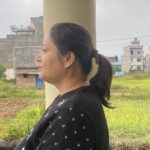
Peace is precious, no matter who you are. I was once a young woman engaged with the People's Liberation Army who fought in Nepal’s Maoist “People’s War” (1996-2006), which we saw as a struggle for justice. I would like to share my story with you here.
Nepal, the country of Everest, is a beautiful country. From the water to the land, it is filled to the brim with natural beauty. However, the feudal state system imposed discrimination, inequality, and deep social disparities on the people. When we could bear it no more, the Maoist People's War began in 1996, for the sake of justice, and an armed uprising broke out.
Those who do not fully understand the nature of the People’s War have attempted to undermine our calls for justice against the state in all sorts of ways, such as by labelling it a “terrorist war.” Even now, that rhetoric persists. However, no matter how it is interpreted, the People’s War was a struggle for justice for the people.
I remain proud of the fact that I fought against the state for the sake of justice at that time. When the People’s War first broke out, I was just 16 years old, but I participated in the pursuit of justice, was a soldier in the People’s Liberation Army, and eventually had the chance to serve as a commander.
During the ten years of the People’s War, the state implemented extremely repressive measures. The state took part in things like shooting innocent civilians and students, raping women, disappearing people, and causing significant damage to people’s lives and property.
Such fear and repression by the state only deepened the people’s support for and cooperation with the Maoist Party. Meanwhile, those who fought in the People’s Army made tremendous sacrifices. War is terrifying and cruel. Many mothers lost their children, wives lost their husbands, and children became orphans. As bombs and bullets from the state wounded and killed people, and burned down villages, it was not mere sorrow, but rage and resentment that grew in the hearts of the people.
Many young people, workers, farmers, and women gradually joined the People's War. I, too, continued to fight with pride. The Maoist movement pushed out the old regime in many parts of the country and ran the “People's Government.” The old government weakened, the Maoist party expanded, and the war intensified. Maoist policies and initiatives brought about a sense of real change to us.
With no clear path to victory or defeat in sight, the Maoist party decided to cooperate with other political parties and shift towards a peaceful movement rooted in the People's War. Then, in 2006, hundreds of thousands of people joined the People's Movement daily, causing the monarchy to lose its real power and a provisional government to be established.
As the country entered the peace process, the Maoist Party also began to pursue its goals through elections. Two parliamentary elections were held to establish a new constitution.
However, the drastic changes that we were expecting did not materialize. Coalition governments were formed again and again, yet little was done to meaningfully improve our lives. Former combatants were also unable to feel the peace and real change they had long hoped for. The discrimination and inequalities of the past re-emerged in new forms. Within the Maoist Party, internal divisions began to emerge and repeated attempts of reorganisation followed.
Once again, those opposing the government began to raise their voices against corruption and injustice. The government responded to this by banning the Maoist movements and resorting to repression, killings, and arrests. While detention and acts of torture were carried out, the calls for peace and justice never ceased. Although the struggle has continued to change shape, movements, protests, and uprisings are still taking place in Nepal today. History has proven that no amount of force can stop the people’s demand for justice.
We need lasting peace. Until this is achieved, calls for peace and justice will only continue to rise. Indeed, peace emerges through the will of the people. Political parties on the side of the people can take the majority of seats in parliament and change the state system. We, too, have tried that path. However, “superficial peace” is not true peace. Peace must be something we can truly feel.
For this to happen, basic needs such as education, healthcare, and employment must be secured in our lives. The government must create jobs and opportunities. If people feel dignity and stability with the state and the government, lasting peace can become possible. If people cannot feel peace in their daily lives, then there can be no peace in politics. Our experiences demonstrate a need for peace, sustainable peace. The very meaning of peace is inseparable from justice, freedom, equality, and equal opportunity. For people who seek freedom and equal opportunities, violence is never something they willingly choose.
There is one thing that I can say with certainty from my experience. Former youth combatants, as well as those who are now caught up in armed conflict, can play a unique role in peacebuilding. Through their words and experiences, they can show society that meaningful change does not have to come through violence. They understand the profound physical and emotional scars left by violence. With their lived experiences, they have the potential to connect their stories and lessons with society and the people around them to create lasting peace.
Even now, conflicts continue to occur both within countries and across borders. War and violence cause immeasurable harm to our lives. That is why we must choose the path of peace and work to uphold the fundamental human rights to live in peace. Change is possible without violence. I strongly believe that there are ways to address challenges facing our society through peaceful movements, dialogue, and raising our voices.
Today, I’m deeply involved in my family and community, as well as political activities, while also running a small business and working in agriculture. At the same time, I feel a strong responsibility to act based on my experience as a former youth combatant. Many of the women who participated in the People’s War continue to suffer both physically and psychologically, even after the conflict has ended. I want to stand with them, offering support and encouragement so that they can live with hope for the future. Another goal I have is to convey to more people the message that achieving peace through peaceful means is possible.
I also would like to translate my book, “Memories of the People's War,” into multiple languages in order to share my experiences and thoughts on peace with the world. Furthermore, as a GTY member, I would like to connect with former youth combatants both in Nepal and beyond, sharing our experiences and encouraging one another as we move forward on the path of peacebuilding together, and make every contribution I can to that path.
I am still pursuing my dream of change.
Disclaimer: The views, information, or opinions expressed in this article are those of the author and do not necessarily represent those of Global Taskforce for Youth Combatants and Accept International.